
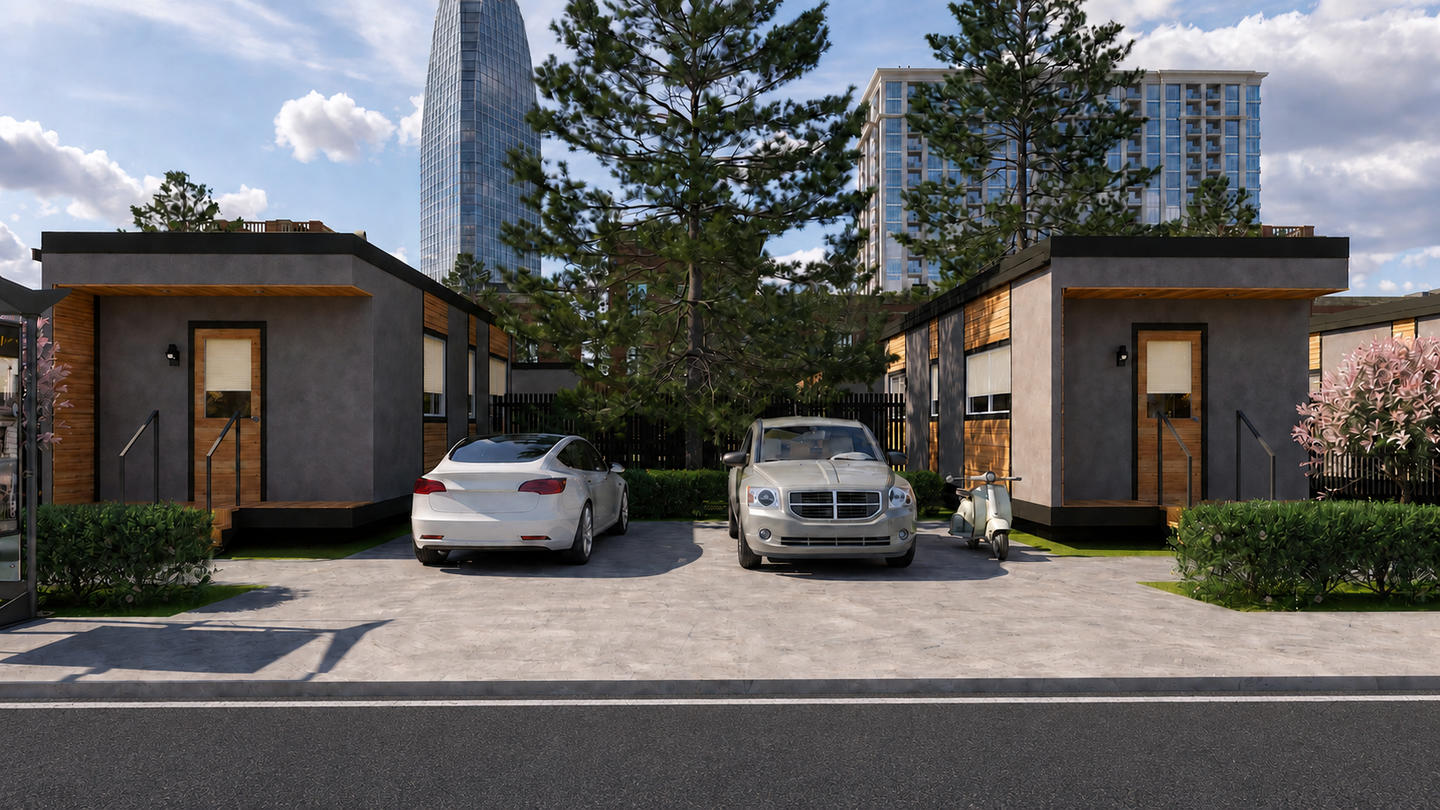
Quick Answer: Modular homes are factory-built in sections and permanently installed on a foundation, following the same state and local building codes as site-built homes. Manufactured homes are built to a separate federal standard (the HUD Code) on a permanent steel chassis. The two are fundamentally different types of housing, and the distinction affects how they are financed, permitted, appraised, and sold.
People use the terms modular and manufactured interchangeably. Even some lenders, local planning departments, and potential buyers make the same mistake. It is an understandable confusion. Both types of homes are built inside a factory. But beyond that shared detail, they are not the same product, and treating them as equivalent can create real problems when it comes to permitting, financing, and long-term value.
If you are exploring factory-built construction for a home, a modular ADU, or a development project in Oregon, Idaho, or Washington, understanding this distinction is not just useful. It is necessary.
What Is a Modular Home?
A modular home is built in sections inside a controlled factory environment. Those sections, called modules, are then transported to the property and permanently installed on a foundation. From that point forward, the home is treated exactly like a conventional site-built house.
Modular homes in Oregon are built under the Oregon Prefabricated Structures Program and must comply with the same state and local residential building codes that apply to any stick-built home in your jurisdiction. They are inspected throughout the manufacturing process by certified state inspectors or approved third-party inspection agencies. You can see the full production sequence on our How It Works page.
Once installed on a permanent foundation, a modular home:
- Is classified as real property
- Qualifies for conventional mortgage financing
- Is appraised using the same comparable-sales methodology as any other home
- Is permitted and inspected through the local authority having jurisdiction
- Resells on the same market as any other residential structure
The factory environment is a production method, not a product category. A modular home built by Timbergon is a code-compliant house. The factory is simply where it happens to be built.
What Is a Manufactured Home?
A manufactured home is also built in a factory, but under a completely different set of rules. Instead of following state residential building codes, manufactured homes are constructed according to the federal HUD Code, formally known as the National Manufactured Housing Construction and Safety Standards Act.
One distinguishing feature is the permanent steel chassis. Unlike a modular home, which is designed to be placed on a site-built foundation and separated from its transport structure, a manufactured home is built on a steel chassis that stays with the home after installation. That chassis is part of what makes a manufactured home a manufactured home.
Depending on how the home is installed, whether the land is owned or leased, and how the title is structured, a manufactured home may be classified as:
- Personal property: similar to a vehicle title, if the home is on rented land or the chassis has not been formally retired
- Real estate: if the home is on owned land, the chassis is retired, and the title has been converted
That classification distinction is what drives most of the downstream differences in financing and resale.
Why the Difference Matters
This is not an academic question. The classification of a home directly affects six things.
Permitting and Zoning. Many Oregon jurisdictions that permit modular homes may have different or more restrictive zoning for manufactured homes. Modular homes are evaluated under local residential zoning, just like any site-built house.
Foundation Requirements. Modular homes require a site-built foundation, either crawlspace or slab, depending on the home’s specifications. Manufactured homes sit on a chassis and may or may not have a traditional foundation depending on the installation type.
Financing Options. This is where the difference becomes most consequential for buyers. Modular homes typically qualify for conventional mortgage programs, including FHA, VA, and USDA loans, because they meet the same standards as site-built homes. Manufactured homes classified as personal property do not qualify for traditional mortgage financing and often require chattel loans, which carry higher interest rates and shorter terms. We cover the full financing picture in How to Finance a Modular Home in Oregon.
Property Appraisal. Modular homes are appraised using local comparable home sales, just like any other house. Manufactured homes, depending on their classification, may be appraised differently, or may have a limited pool of comparable sales available.
Insurance Coverage. Standard homeowner’s insurance policies typically cover modular homes. Manufactured homes may require a specialized policy, and coverage terms can vary significantly.
Resale Value. Modular homes appreciate and depreciate alongside comparable site-built homes in their market. Manufactured homes, particularly those classified as personal property, have historically depreciated more quickly, though homes converted to real estate and installed on permanent foundations can perform more like traditional housing.
The Simplest Way to Remember the Difference
A modular home is a conventionally built house that happens to be constructed off-site. It follows state and local building codes, sits on a permanent foundation, and is treated like any other residential property for financing, insurance, and resale purposes. The Rogue is a working example of exactly that.
A manufactured home is a federally regulated dwelling built to the HUD Code on a permanent steel chassis. Its classification as personal property or real estate depends on several factors, and that classification affects nearly everything downstream.
If you are building or buying in Central Oregon, eastern Oregon, or anywhere in the tri-state area of Oregon, Washington, and Idaho, knowing which category your home falls into before you break ground matters for your financing options, your permitting process, and the long-term value of the investment.
Frequently Asked Questions
Is a modular home the same as a mobile home?
No. A mobile home (the term used before 1976, now formally called a manufactured home) is a HUD-regulated dwelling built on a steel chassis. A modular home is built in sections to state and local residential building codes and permanently installed on a site-built foundation. They are two distinct types of housing.
Do modular homes qualify for conventional mortgages?
Yes. Because modular homes meet the same building standards as site-built homes and are permanently attached to real property, they typically qualify for conventional, FHA, VA, and USDA mortgage programs, subject to lender underwriting requirements.
Are modular homes built to the same quality standards as stick-built homes?
Yes. In Oregon, modular homes are built under the Oregon Prefabricated Structures Program and must comply with the same state residential specialty codes that apply to any site-built home in the local jurisdiction. Homes receive an Oregon insignia of compliance before leaving the factory.
Can a modular home be placed anywhere a site-built home can be placed?
Generally yes, for residential zones. Local zoning and land use rules govern what can be built where, and modular homes are subject to the same residential zoning requirements as site-built construction. Manufactured homes may be subject to separate or additional restrictions depending on the jurisdiction.
What happens to a modular home’s value over time?
Modular homes appreciate and depreciate based on the same market factors as comparable site-built homes: location, condition, size, and local market trends. They are not treated separately in the appraisal or resale process.
Is a manufactured home ever treated like real estate?
Yes, under certain conditions. If a manufactured home is placed on owned land, the chassis is retired, and the title is converted from personal property to real property, it may qualify for real estate treatment and, in some cases, conventional financing. The process and eligibility requirements vary by state and lender.
Does Oregon regulate modular construction differently than other states?
Oregon operates under the Oregon Prefabricated Structures Program, administered by the Oregon Building Codes Division. Oregon, Washington, and Idaho participate in a Tristate Agreement that allows manufacturers in any of the three states to receive shared plan review and inspection services under a reciprocity program.
References
- Oregon Revised Statutes (ORS) 455.010: Definition of Prefabricated Structure
- Oregon Administrative Rule (OAR) 918-674-0005: Definition of Closed Construction
- ORS 446.003: Definition of Manufactured Dwelling
- Oregon Building Codes Division: Prefabricated Structures Program
- U.S. Department of Housing and Urban Development: HUD Code for Manufactured Housing
About the Author

Vicente Gonzalez
Founder, Timbergon Modular | Redmond, Oregon
Vicente Gonzalez trained in Naval Architecture and Yacht Design at The Landing School in Maine and earned a degree in Yacht Design and Production from Southampton Solent University in England, where factory-driven precision engineering was foundational. Before launching Timbergon, he led modular product development at Tecno Fast in Chile and developed more than 50 residential units in Central Oregon. He founded Timbergon Modular to apply that same manufacturing discipline to the region’s growing housing demand.
Ready to Build the Right Way?
Timbergon Modular builds code-compliant, permanently installed modular homes for homeowners, ADU buyers, investors, and developers across Oregon, Washington, and Idaho. If you have questions about how modular construction works, or whether it is the right fit for your project, we are glad to talk through it.
Call (458) 666-5870 or email vg@timbergon.com.